Jenner & Block Wins Landmark Supreme Court Victory in Chatrie v. United States
News
June 29, 2026
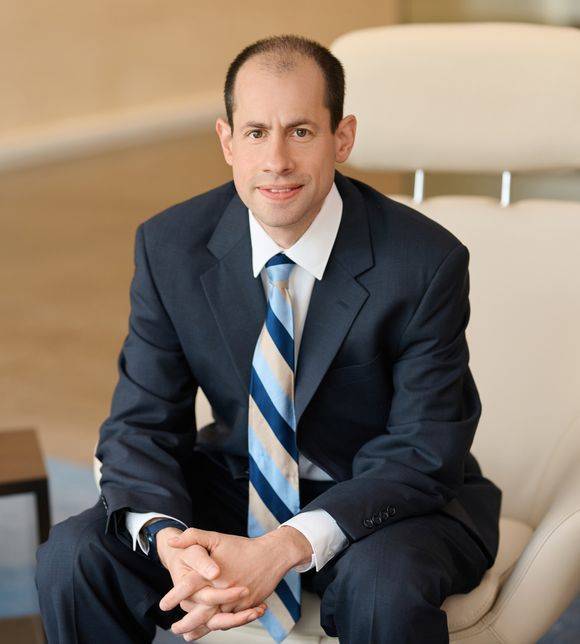
Jenner & Block Partner Adam Unikowsky has secured a landmark victory at the Supreme Court of the United States in Chatrie v. United States, with the Court holding by a 6-3 vote that accessing a person’s location data in the cloud is a “search” under the Fourth Amendment, requiring law enforcement to obtain a warrant satisfying the Constitution’s probable cause and particularity requirements. The Court remanded the case to the US Court of Appeals for the Fourth Circuit to determine whether the specific geofence warrant used against Mr. Chatrie met those requirements.
The case centered on a geofence warrant served on Google by law enforcement following a 2019 armed robbery of a federal credit union in Midlothian, Virginia. Using the warrant, police compelled Google to produce location data for every device within a 150-meter radius of the bank during a one-hour window around the robbery—without identifying a specific suspect. Police then compelled Google to turn over additional location data outside the 150-meter radius for certain devices. The data led officers to Mr. Chatrie, who was subsequently charged with bank robbery. Although the district court found the geofence warrant was not supported by probable cause, it permitted the evidence under the good-faith exception to the exclusionary rule. The US Court of Appeals for the Fourth Circuit affirmed.
The Jenner team argued before the Supreme Court that sweeping the location data of every individual in a defined area during a specified time constitutes a search under the Fourth Amendment. The Court agreed. In an opinion by Justice Kagan, joined by Chief Justice Roberts and Justices Sotomayor, Kavanaugh, and Jackson, with Justice Gorsuch concurring separately in the judgment, the Supreme Court ruled that people have a reasonable expectation of privacy in their location history in the cloud.
“We are gratified by the Court’s ruling, which recognizes that the Fourth Amendment’s protections extend to the digital location data that technology companies collect about millions of Americans every day,” said Adam. “This decision establishes that geofence warrants must meet the Fourth Amendment’s particularity and probable cause requirements.”
The matter was led by Adam, who argued the case before the Court, with support from Associates Laurel Raymond and Annie Warnke, Paralegal Supervisor Cheryl Olson and Paralegal Mary Frances Patston.
Related Attorneys
Related Capabilities
Related Locations
© 2026 Jenner & Block LLP. Attorney Advertising. Jenner & Block LLP is an Illinois Limited Liability Partnership including professional corporations. This publication, presentation, or event is not intended to provide legal advice but to provide information on legal matters and/or firm news of interest to our clients and colleagues. Readers or attendees should seek specific legal advice before taking any action with respect to matters mentioned in this publication or at this event. The attorney responsible for this communication is Brent E. Kidwell, Jenner & Block LLP, 353 N. Clark Street, Chicago, IL 60654-3456. Prior results do not guarantee a similar outcome. Jenner & Block London LLP, an affiliate of Jenner & Block LLP, is a limited liability partnership established under the laws of the State of Delaware, USA and is authorised and regulated by the Solicitors Regulation Authority with SRA number 615729. Information regarding the data we collect and the rights you have over your data can be found in our Privacy Notice. For further inquiries, please contact dataprotection@jenner.com.
News
June 29, 2026
Jenner & Block Partner Adam Unikowsky has secured a landmark victory at the Supreme Court of the United States in Chatrie v. United States, with the Court holding by a 6-3 vote that accessing a person’s location data in the cloud is a “search” under the Fourth Amendment, requiring law enforcement to obtain a warrant satisfying the Constitution’s probable cause and particularity requirements. The Court remanded the case to the US Court of Appeals for the Fourth Circuit to determine whether the specific geofence warrant used against Mr. Chatrie met those requirements.
The case centered on a geofence warrant served on Google by law enforcement following a 2019 armed robbery of a federal credit union in Midlothian, Virginia. Using the warrant, police compelled Google to produce location data for every device within a 150-meter radius of the bank during a one-hour window around the robbery—without identifying a specific suspect. Police then compelled Google to turn over additional location data outside the 150-meter radius for certain devices. The data led officers to Mr. Chatrie, who was subsequently charged with bank robbery. Although the district court found the geofence warrant was not supported by probable cause, it permitted the evidence under the good-faith exception to the exclusionary rule. The US Court of Appeals for the Fourth Circuit affirmed.
The Jenner team argued before the Supreme Court that sweeping the location data of every individual in a defined area during a specified time constitutes a search under the Fourth Amendment. The Court agreed. In an opinion by Justice Kagan, joined by Chief Justice Roberts and Justices Sotomayor, Kavanaugh, and Jackson, with Justice Gorsuch concurring separately in the judgment, the Supreme Court ruled that people have a reasonable expectation of privacy in their location history in the cloud.
“We are gratified by the Court’s ruling, which recognizes that the Fourth Amendment’s protections extend to the digital location data that technology companies collect about millions of Americans every day,” said Adam. “This decision establishes that geofence warrants must meet the Fourth Amendment’s particularity and probable cause requirements.”
The matter was led by Adam, who argued the case before the Court, with support from Associates Laurel Raymond and Annie Warnke, Paralegal Supervisor Cheryl Olson and Paralegal Mary Frances Patston.
Related Attorneys
Related Capabilities
Related Locations
© 2026 Jenner & Block LLP. Attorney Advertising. Jenner & Block LLP is an Illinois Limited Liability Partnership including professional corporations. This publication, presentation, or event is not intended to provide legal advice but to provide information on legal matters and/or firm news of interest to our clients and colleagues. Readers or attendees should seek specific legal advice before taking any action with respect to matters mentioned in this publication or at this event. The attorney responsible for this communication is Brent E. Kidwell, Jenner & Block LLP, 353 N. Clark Street, Chicago, IL 60654-3456. Prior results do not guarantee a similar outcome. Jenner & Block London LLP, an affiliate of Jenner & Block LLP, is a limited liability partnership established under the laws of the State of Delaware, USA and is authorised and regulated by the Solicitors Regulation Authority with SRA number 615729. Information regarding the data we collect and the rights you have over your data can be found in our Privacy Notice. For further inquiries, please contact dataprotection@jenner.com.
News and Insights
Event
Partner Michael Vernick to Speak at NACUA's 2026 Annual Conference
On July 1, Partner Michael Vernick will speak on a panel at the National Association of College and University Attorneys (NACUA) 2026 Annual Conference in Nashville.
July 1, 2026
Publications
In Employee Relations Law Journal: What Happens When ERISA Disability Deadlines Slip
Partner Joseph Torres along with Associates Emma O'Connor and Christopher LeWarne, authored an article for the Employee Relations Law Journal analyzing a significant Fourth Circuit decision with substantial consequences for ERISA disability plan administrators.
June 23, 2026
Event
Jenner & Block Partners to Speak at Council on Governmental Relations Conference
On June 11, Partners Mike Vernick, Katie Wynbrandt, and Betsy Henthorne will speak on a panel at the Council on Governmental Relations (COGR) meeting.
June 11, 2026